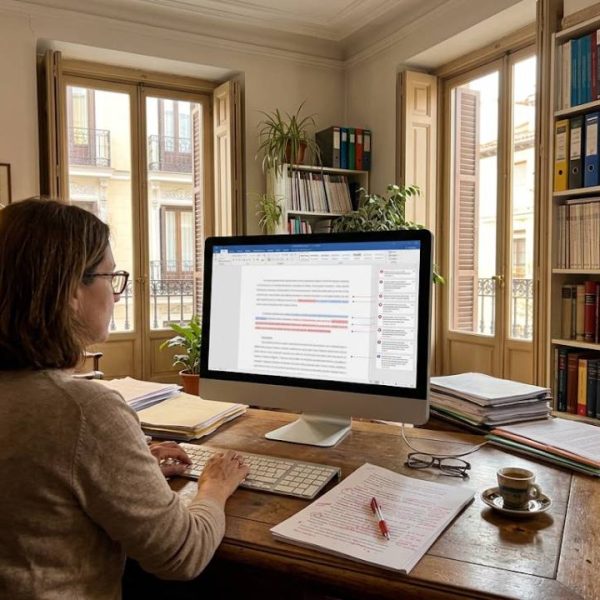
For many editors and proofreaders, reviewing a translation still means opening a Word file with tracked changes, the original in a second window, and scrolling back and forth between them. It works, but it is slow. It is also easy to miss an omitted sentence, a changed number or a term translated inconsistently across forty pages.
Reviewing inside a computer-assisted translation environment changes the experience. Source and target sit side by side, segment by segment, and the software handles the mechanical checks so the reviewer can focus on meaning and style.
Bilingual review versus monolingual proofreading
It helps to separate two tasks. Bilingual revision compares the translation with the source to confirm accuracy, completeness and terminology. Monolingual proofreading reads the target text on its own for fluency, grammar, spelling and style. Both matter. A text can read beautifully and still misstate the source, or match the source perfectly and still sound stiff.
A good review workflow includes both, often by different people, and the software should support both modes: side-by-side comparison for revision and a clean target preview for proofreading.
Why segment-level review is faster
When text is split into segments, nothing can hide. Every source sentence has a corresponding target sentence, so omissions jump out immediately. Reviewers can filter segments: show only those not yet reviewed, those with comments, those flagged by quality checks or those containing a specific term. Instead of rereading a whole document, they jump straight to what needs attention.
Tracked changes that feed the memory
In a modern translation cat tool, a reviewer's corrections are tracked like in a word processor, but they also update the translation memory once approved. The next time the same sentence appears, the corrected version is suggested. Reviewing therefore improves not only the current document but all future work for that client.
Translators can see every change and the reviewer's comments, which turns review into feedback rather than silent correction.
Automated checks reviewers should run first
Before reading a single sentence, run quality checks. They catch:
- Untranslated or empty segments.
- Numbers, dates and units that differ from the source.
- Terms that ignore the approved glossary.
- Inconsistent translations of identical source sentences.
- Double spaces, missing punctuation and tag errors.
Fixing these first means the human review time goes into nuance, not typos.
Academic texts and research papers
Translations of academic articles between Spanish and English demand particular care. Technical terminology must match the conventions of the field, citations and references must stay intact, and style must fit the target journal's expectations. Editors working in a bilingual environment can verify that every claim, figure and hedge in the original survived translation, an essential point for peer review.
In research, a softened or strengthened claim changes the science. Segment-level comparison makes such shifts much easier to spot.
Style guides and consistency
Clients often provide style guides: British or American spelling, serial comma or not, how to format numbers and units, preferred terms. Translating these rules into automated checks and termbase entries lets reviewers enforce them consistently across documents and team members. A reviewer should not have to remember thirty rules; the software can remember them.
Measuring quality
Some teams use error categories during review: accuracy, terminology, style, grammar, locale conventions. Logging errors this way produces quality scores over time, highlights where translators need support and gives clients objective evidence of quality. Review tools inside translation platforms often support such categorisation directly.
Working with clients and authors
For academic and corporate clients, the final word often belongs to the author. Inviting authors into the review step, with access limited to comments or approval, keeps everyone in the same environment. Questions about intended meaning are asked on the exact segment and answered there, without long email threads.
Many businesses prefer to place this entire review chain with a translation agency that manages translators, editors and proofreaders under one roof. A good agency defines how many review rounds are included, documents its quality checks and gives clients visibility into every correction. Outsourcing the full workflow, rather than hiring separate freelancers, keeps accountability clear when deadlines are tight.
Reviewing machine-assisted translations
More and more translations start as machine drafts edited by a linguist. Reviewing them requires extra vigilance, because machine errors look different from human ones. They are often fluent and grammatically perfect while quietly changing meaning, dropping a negation or translating the same term three different ways. A reviewer working in a bilingual editor can compare each segment against the source and see whether a suggestion came from memory, from a machine engine or from the translator, which helps decide where to look most closely.
Practical tips for editors
Review in two passes: a bilingual pass for accuracy, then a monolingual read-through of the clean target text for flow. Use filters to focus first on segments flagged by checks. Leave comments that explain why a change was made, not just what changed. Agree with the client in advance how many review rounds are included. And keep a short list of recurring issues per translator, so feedback leads to steady improvement rather than the same corrections every month.
From checking to improving
Proofreading inside the editor turns review from a final hurdle into a learning loop. Errors are caught faster, corrections improve future translations and translators receive structured feedback. For editing and proofreading specialists, it is a way to deliver more thorough work in less time, which is exactly what researchers and businesses need.